I found myself very confused and struggling to think of an idea after doing some research, so I decided the best thing to do was to literally just type in "Human hybrids" on google images and see what came up to give me some inspiration, and to see if there was anything that really jumped out at me... Eventually something finally did! Although, it did not feature any part of a human at all - this was the image that interested me:
I have always loved butterflies and think they are stunning creatures to look at. There are so many different colours and designs, that it would give me a good amount of freedom and creativity to play with in this project. I was not necessarily interested in the elephant part of this image, but it did trigger me to think about moulding a butterfly onto the whole of the face, and the elephant's trunk represented the human nose, thus gave me the placing of my piece on the face.
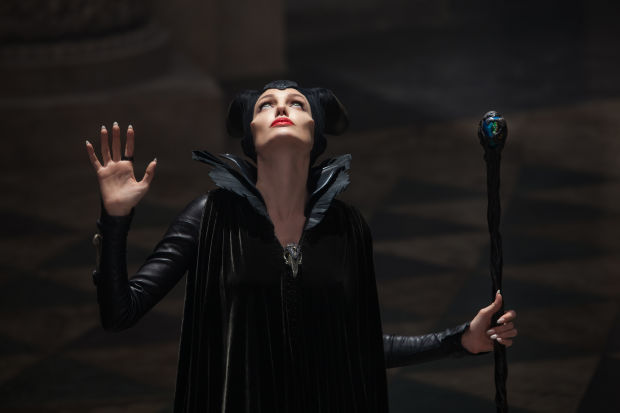
In my head I began drawing on previous research that I carried out on Maleficent, and the idea of her extremely structured cheekbones made me think that this could be the outline for the bottom wings of the butterfly:
When you actually look at this image as a whole, the use of the head piece almost gives an outline of a butterfly shape, however this is not what I am going to do, but it is a great image/guide for inspiration! At this point, I think I am going to sculpt the butterfly shape all around the face, in a similar way to which the cheeks are in this. Thus, the butterfly outline will all be risen up off of the face.
My next step is to look at if there are currently any butterfly/human hybrids that exist, and if so how have they achieved this, and then I will begin to look at butterflies in depth. At this point in time, I just feel quite excited and relieved to finally have an idea which I can move forward with.
Jordu Schell has been in the film and television industry since 1987.His talent as a designer and sculptor is world renowned, and his credits include: “Avatar”, “The Chronicles of Narnia: Prince Caspian”, “300”, “Hellboy”, “Aliens vs. Predator – Requiem”, “Men in Black”, “The Mist”, “Batman Returns”, “Edward Scissorhands”, “Alien: Resurrection”, “The X-Files Movie”, “Predator II”, “Galaxy Quest”, “Evolution”, “Babylon 5-The Series” (on which he designed an emmy award-winning creature make-up and the first fully digital creature for a television series), and many more.
I found Schell's work extremely impressive, and I really like how he is able to include so much detail and realism within some of his sculptures. I think watching his demo could be very useful during this part of the project, because I could look at what he does to sculpt and changed the face, and then do something similar but on a much larger scale.
Web reference:http://www.jorduschell.com/about.html
As with many young boys in the late 70’s, “Star Wars” had such a profound impact that it inspired Neville to pursue the field of entertainment. He wanted to be in the sci-fi movies and at the time he did not even know that design existed. At 17, Neville packed up the car and drove cross-country to Hollywood to pursue the infamous dream.
After completing two years of acting school, he was primed and ready for the big screen. Auditions trickled in and tables kept getting served. It was not until his girlfriend’s mother questioned his ability to provide, that he himself began to question his ability to provide. With that realization, Neville called his mother and announced, “that’s it, I’m out. What was that school on the hill above the Rose Bowl you have been talking about?” Literally, as he hung up the phone with his mother, excited at the prospect that he would pursue a new career entirely, it rang again. It was the big break. He was hired to appear on the soap opera “General Hospital.” Whether it was fate or typecasting, he was to play a waiter. Shortly thereafter, his character was dropped and the real career would begin.
During the time he was putting together his art portfolio, to make ends meet Neville performed at the Ice House in Pasadena and the Improv in Hollywood as a stand-up comedian. However, once at Art Center College of Design, he realized his true calling. Although he did not understand completely what it was that he was doing, it felt 100% right. So “right,” in fact, that he graduated with honors in 1990 and immediately started a design consultancy with his roommate, who would eventually become his best friend and studio partner, Scott Robertson.
Together he and Scott developed a wide range of products from durable medical goods to action figures. Eventually, they found themselves teaching at the Art Center campus in Switzerland until its unfortunate demise in 1996. Upon returning to Los Angeles, Neville resumed teaching at Art Center and took on the position as Assistant Chair of Product Design. Additionally, he teaches at the Otis College of Art and Design and also at The GnomonSchool of Visual Effects.
In addition to his teaching career, TV appearances, his film and photography work, Neville is currently involved as a design consultant for the entertainment, toy, and automotive industries; and is developing his own line of educational art products.
Web references: http://www.nevillepage.com/about.html
Angelina Jolie seems to completely inhabit the role of Maleficent in the film. From the not-quite-human eyes to her disconcerting cheekbones, the talented creatives behind the movie -- led by Jolie herself, who’s an executive producer -- have fabricated a character who is both beautiful and terrible at the same time. Which is exactly the point. The Prosthetics: Those hyper-chiseled cheekbones are the first thing you notice when you look at pictures of Jolie as Maleficent. Jolie contacted special effects makeup master Rick Baker and her personal makeup artist Toni G, who conceptualized her look. Arjen Tuiten then worked with Baker and Toni G to make the actual prosthetics. He also did the daily work of applying them to her face.
“She’s basically a fantasy creature, but it still had to be very beautiful, you know? It couldn’t just be effects with silly, heavy makeup,” Tuiten said. “Disney was very nervous in the beginning. They were like, ‘Wait, what? Prosthetics on Angelina? Why are we covering her up?’ They were not very keen on it.” But Jolie insisted, and she convinced the Disney executives, who anxiously showed up to the daily makeup tests, that it was the right course of action. She ended up with cheek prosthetics, a subtle nose piece, pointy ears and sharp molars. Originally the makeup team gave Maleficent a prosthetic forehead and chin as well, but the overall effect was too “devilish” so they scrapped it. “We didn’t want to make her a caricature,” Tuiten explained.
The Perfect Skin: In the movie, Maleficent’s skin isn’t quite as dramatically pale as it appears in the highly stylized Mert and Marcus-lensed movie posters, but it’s also not green like the original animated Maleficent’s. “[Angelina] didn’t want everyone to be looking at a green, overly made-up face. We thought it would be distracting,” Toni G said. But it’s not natural, either. She stippled on MAC Select Cover Concealer with a wet sponge in a color paler than Jolie’s natural skin tone without any blush.
According to the two makeup artists, it took about three hours to apply the makeup and one hour to remove it every day. The actress was in full makeup for 70 days, often for 16 hours at a time. Toni G used Kiehl’s Blue Astringent to prep Jolie’s face before applying the prosthetics to remove oil, but that’s all she could use, because otherwise the silicone wouldn’t stick. The team removed everything at the end of the day using a mixture of coconut and argan oil.
The Red Lips: “We tried many, many lipsticks,” Toni G said. They finally settled on one color, MAC’s Pro Longwear Lipglass in Anthurium, “It wasn’t pink and it wasn’t completely orange, it just had that true red tone,” Toni G said. She estimated that they used about three tubes over the course of shooting.
The Creepy Eyes: Toni G was inspired by the colors of the labradorite stone, a mineral which has a swirly, metallic, oil-spill finish. Those colors made it into Maleficent’s eye makeup palette and the director loved it so much that he incorporated the stone into Maleficent’s staff, according to Tuiten. It also inspired the color of her creepy contact lenses, which were hand painted by contact lens artist Cristina Patterson. (Rick Baker told Allure the pupils were inspired by goat eyes.) “The lenses mimicked the actual colors [Jolie] has in her eyes. They just gave her a bit more magic,” Toni G said.
The Nails: Jolie’s nails are appropriately long and sinister throughout the movie, but in some scenes, be on the lookout for a bit of sneaky nail art. According to Tuiten, Jolie suggested painting the underside of her nails – the tops of which are painted a bone colour—red.
The Costumes: Rob Goodwin, a shoe designer and leather worker, was brought on later in the movie-making process to add “sharper edges” to the costumes. “The danger is with characters like Maleficent, you can slip into something that’s fetish-y and I didn’t want that. I don’t find that interesting – it’s a bit pedestrian,” Goodwin said. “You want to make something more elegant and savage. That’s how I approached it. We tried to make her both brutal and couture.” The facial prosthetics and horns “nudged” him and his fellow designers Manuel Albarran and Justin Smith to create wardrobe pieces that were more angular. You’ll see exaggerated shoulders and collars on all her various outfits as a result, including one inspired by the shape of a pelvic bone. “With Angelina you can get away with making things more masculine because she’s so beautiful. She can counter it,” Goodwin said.
Texture plays a big part in the overall costume design as well. Goodwin, being a shoe designer by trade, admitted that he tried to sneak as much leather in as possible. They used cow leather, sting ray and even ostrich shin leather. “[Ostrich shin] is a really fantastic leather. It’s used sometimes in shoes and bags. But it looks like scales. She was winged and she had a bird companion so it combined all those aspects of her character,” he said. The designers didn’t want to use anything that looked manmade – her accessories were all bone and bead. “It had to look like she could evolve these things,” Goodwin said.
And what about those horns? Jolie’s team placed a skull cap over her hair, and the horns attached with magnets so that they could be removed easily. (Rick Baker told Allure that McQueen designer Sarah Burton had a hand in the horn design.) Jolie told Entertainment Weekly that there were different horns of varying size and heaviness for different shots. The horns added an extra foot of height, and her shoes an extra five inches, adding to the overall imposing image.
Web reference: http://fashionista.com/2014/05/maleficent-makeup-costumes
Ralph Fiennes has personified the evil Dark Lord since Harry Potter and the Goblet of Fire when he regained a human body. The Oscar-nominated actor embraced playing the ultimate villain in the Harry Potter films and says the hours in the makeup chair helped him to get into character. Ralph Fiennes as Voldemort sports a snake-like “nose,” heavy brow sans eyebrows and a pale bald dome. How long does this sinister makeover take? At least two-and-a-half hours for Fiennes, who viewed the time as essential to his portraying the full evilness of Voldemort. “A certain look that you have helps you locate who you’re being. You look at yourself in the mirror, you see this face, and you say, ‘I know who I am,’” Fiennes told MTV News.
In the book the character had red eyes, however they decided this would not work in the film because you wouldn't be able to see the emotion in the eyes.
The costume designer made the materials worn very light so it would move almost like a spirit, they used lots of thin, silk layers to achieve this.
The nose is the main/obvious snake feature they have used in the hybrid
The designers said that they looked at using prosthetic pieces, however this would mean that they would have to bring other features of his face forwards to make it look like the nose was sunken in. They decided that the best way to achieve this look would be to digitally drop back the nose in post production because it would look very out of this world as it is not possible with makeup. They also removed his human nostrils and gave him slits, to look more snake-like; they did this by using tracking dots on his face.
The makeup artists covered Voldemort in tattoo transfers to make it look like he had veins all over his head and hands etc. This would achieve continuity, as spraying them on every time would have been very time consuming and extremely difficult to get them in the same place.
They wanted to make sure that they didn't use too much makeup as they wanted him to be able to move freely and for his expressions to be very realistic.
He shaved his hair completely off on his head so that a bald cap didn't have to be used and so it looked very realistic.
The makeup artists used gelatine to cover his eyebrows, as Fiennes did not want to shave his off, but this also created deeper eye sockets, giving a very sunken in and shadowed look.
No other prosthetics were used around the rest of his face so he could move freely and also so the rest of his face looked as human-like as possible.
He also had very long, spindly fingers with long pointed nails
Finally, they gave him fake teeth.
Web references: http://www.harrypotterfans.com/2011/04/ralph-fiennes-chilling-voldemort-transformation/ http://prostheticmakeupfx.com/tag/lord-voldemort/
The ‘TomTato’ can grow more than 500 sweet cherry tomatoes above ground, while beneath the soil it produces white potatoes that are suitable for boiling, roasting or turning into chips.The hybrid plants are not a product of genetic engineering, but are each individually hand-grafted. Like potatoes, tomatoes are members of the nightshade family (Solanaceae), which makes them compatible for grafting. Tiger Stripe Rose
Many flowers can combine and mix genes in their flower bed to produce many variations of existing flowers and plants.
Tangelo
Tangelos are a cross between tangerines and grapefruits, or pomelos. Created by a USDA biologist named Walter Swingle in 1911, the tangelo is super juicy and incredibly large when put next to an ordinary tangerine.
Artist's Tree
Sam Van Aken’s Tree of 40 Fruit can produce more than three dozen varieties of peaches, plums, nectarines and cherries. The ongoing project is part research, part conservation and part beautiful artwork.
Web references: http://www.telegraph.co.uk/gardening/howtogrow/fruitandvegetables/10332908/TomTato-mutant-plant-that-grows-tomatoes-and-potatoes-unleashed.html http://www.nydailynews.com/life-style/artist-creates-hybrid-tree-grows-40-fruit-article-1.1887459
Definition of animal hybrid: the offspring of two animals or plants of different breeds, varieties, species, or genera, especially as produced through human manipulation for specific genetic characteristics. Ligers
Ligers are the cross of a male lion and a female tiger, and they are the largest of all living cats and felines. Their massive size may be a result of imprinted genes which are not fully expressed in their parents, but are left unchecked when the two different species mate. Some female ligers can grow to 10 feet in length and weigh more than 700 pounds. Ligers are distinct from tigons, which come from a female lion and male tiger. Various other big cat hybrids have been created too, including leopons (a leopard and a lion mix), jaguleps (a jaguar and leopard mix), and even lijaguleps (a lion and jagulep mix).
Zebroids
A zebroid is the offspring of a cross between a zebra and any other equine, usually a horse or a donkey. There are zorses, zonkeys, zonies and a host of other combinations. Zebroids are an interesting example of hybrids bred from species that have a radically different number of chromosomes. For instance, horses have 64 chromosomes and zebra have between 32 and 44 (depending on species).
Grolar Bears
The offspring of a grizzly bear and a polar bear, a grolar bear is one beast you don't want to meet in the woods. Interestingly, unlike many hybrid animals on this list, grolar bears are known to occur naturally in the wild. Some experts predict that polar bears may be driven to breed with grizzly bears at an increased frequency due to global warming, and the fact that polar bears are being forced from their natural habitats on the polar ice.
Wholpins
A cross between a false killer whale and an Atlantic bottlenose dolphin, wholphins are hybrids that have been reported to exist in the wild. There are currently two in captivity, both at Sea Life Park in Hawaii. The wholphin's size, color and shape are intermediate between the parent species. Even their number of teeth is mixed; a bottlenose has 88 teeth, a false killer whale has 44 teeth, and a wholphin has 66.
Savannah Cat
Savannah cats are the name given to the offspring of a domestic cat and a serval — a medium-sized, large-eared wild African cat. The unusual cross became popular among breeders at the end of the 20th century, and in 2001 the International Cat Association accepted it as a new registered breed. Interestingly, savannahs are much more social than typical domestic cats, and they are often compared to dogs in their loyalty. They can be trained to walk on a leash and even taught to play fetch.
I actually found it quite interesting when looking into these hybrids, because a lot of them I did not know existed. I love looking at the final product of the 2 different animals combined together, and how you can pick out which features come from which specific animal. I think it's really fascinating that you can just combine 2 things together and make something totally new, this leads to endless possibilities of animal breeds!
Web references: dictionary.reference.com/browse/hybrid