Sunday, 8 November 2015

Final Face/Hair Chart

This is my final face and hair chart. 
  • Prosthetic pieces will be attached on the cheeks, forehead, and nose - this will make the face into a structure that is similar to a butterfly
  • It will then have a purple butterfly design/pattern on top of the prosthetic pieces and fade out into the middle 
  • The nose will have a 'body' of a butterfly, and this will be dark purple, as well as the antennas that will be attached to the forehead
  • There will be a purple smokey eye, with black eyeliner and mascara
  • There will be purple to lilac ombre lips
  • The hair will be quite voluminous, wavy and pulled back off of the face
Example of hair design
I have chosen the hair to be like this because I want it to be quite voluminous and 'fly away', to keep the feel of freedom and butterfly-like. I am going to have it pulled back off of the face so that it allows you to see the whole design on the face and does not get in the way, or distract too much attention away from the face. 


Purple Emperor Butterfly


The Purple Emperor is a magnificent and elusive insect that is actively sought out by the many subjects of "His Majesty", as the male butterfly is affectionately known. This butterfly spends most of its time in the woodland canopy where it feeds on aphid honeydew, with the occasional close encounter when it comes down to feed on sap runs or, in the case of the male, animal droppings, carrion or moist ground that provide much-needed salts and minerals. Those that make pilgrimages to see this spectacular creature will often try and lure the males down from the canopy using all manner of temptations - including banana skins and shrimp paste.

The male butterfly is one of the most beautiful of all of the butterflies found in the British Isles. From certain angles it appears to have black wings intersected with white bands. However, when the wings are at a certain angle to the sun, the most beautiful purple sheen is displayed, a result of light being refracted from the structures of the wing scales. The female, on the other hand, is a deep brown and does not possess the purple sheen found in the male.


This species is best seen in early morning and again in late afternoon, when the males will come down to the ground to feed on moisture from damp earth and animal droppings. The males are sometimes so engrossed in feeding that they will spend over an hour feeding in the same place, each displaying its characteristic yellow proboscis. The males are also notorious for feeding on mud and other debris that has gathered on surfaces of cars parked within the woodland. They are also partial to sweat and readily land on observers. However, both male and female spend the majority of their time resting high in the tree canopy and out of sight.


In late morning, the males will fly off and ultimately congregate at so-called "master trees" that provide a vantage point for intercepting passing females. These trees are typically at a high point in the wood, such as trees growing on the summit of a hill, and the same trees are used year after year. Locating a master tree is one of the best ways to catch a glimpse of this elusive insect. Seeing the males battle it out for the best vantage points, with flashes of purple as the light hits their wings, is an amazing spectacle.


When a virgin female is encountered, the pair fly off and settle in the canopy where mating takes place. If the female has already mated, then she has the curious habit of descending straight to the ground, where the male ultimately loses interest and returns to his perch.

This is the design I am going to base my butterfly hybrid around. I have chosen this one because it is one that lives in the UK and thus is quite close to home. Also, I think it is one of the most beautiful, and that is, in a way, what I want my hybrid to be - I feel that whenever anyone thinks about butterflies they just think about how pretty they are. This is the image I am going to be working from when applying my design; I have chosen a simple one because I feel it will be the easiest to work from as I can see the clear lines and patterns, and then I can adapt it accordingly on the face:
Web reference: http://www.ukbutterflies.co.uk/species.php?vernacular_name=Purple%20Emperor


Initial Facecharts Of My Ideas

This is my first idea:
  • The whole outline of the butterfly will be prosthetics, thus will be raised 
  • The design/pattern of the butterfly would all be done with make-up, e.g. eyeshadow/supracolor
  • This is the design I am least keen on - I feel it is too obvious and not necessarily a hybrid as such, because the butterfly is just placed in the centre of the face

My second idea:
  • There will be no outline of the butterfly in this design
  • The pattern of the butterfly will be made out of prosthetics, and so will be raised from the face
  • It will have antennas on the forehead made from prosthetics 
  • I think if done well, this could look quite effective
  • However, it would be extremely intricate, delicate, and time consuming, thus I may not be able to complete the full look in time, which would impact the overall outcome
  • I would need to decide whether to create 2 big prosthetic pieces, each with the patterns already carved out (meaning I would need to leave holes for the eyes)
  • Or I would mould each line individually and then attach separately onto the face, which would be quite complicated, and take a lot of time

 My final design:
  • This design only shows the prosthetic pieces - it would include more of a butterfly design with the use of make-up
  • There would be 7 prosthetic pieces - 2 on the forehead, 1 on each cheek, 1 down the nose, and 2 antennas 
  • The prosthetics would raise and sharpen the areas, to shape/mould the face to make it into a sort of butterfly shape
  • I really like this idea, and think that it could be very effective if carried out how I am picturing it
  • With the make-up applied on top, it will incorporate more of a butterfly design to give more of a butterfly feel
After evaluating all of these designs, I have decided to go with my final design because I feel that it is the most creative and most original - there is nothing like it out there. I feel that it will be achievable, and it also gives me quite a lot of freedom with my make-up to add to the butterfly effect. 

Therefore, my next step is to create a final face chart with the make-up added to show the full effect, and to ensure it looks how I want it to. 


Combining The Human And Butterfly

For my hybrid, I have decided to combine the butterfly onto the face of the human. However, I am not yet sure of how I want to do this; for example, the placement, size, which features of the butterfly I want to include, and which parts will be prosthetics. Therefore, I have gathered some images to try and demonstrate what I am currently thinking...


This was something I was considering, whereby some of the outlines of the butterfly would be made out of prosthetics to raise it from the skin, and the rest would be done with make-up. 
This is a very interesting idea, but I feel that it is not necessarily a hybrid - it is just a butterfly stuck on the face. Also, it would be quite difficult to do with the prosthetic piece because it would be very fiddly and too intricate to attach and paint.
A lot of the things I am looking at are extremely similar to face painting, but this is obviously not what I want to achieve. However, I could use something like this - the black parts would be the prosthetic pieces, and then the rest would be done with make-up, which would fade down the rest of the face. 
The thing I have take from this image, is that the scales and pattern of the butterfly would be would I use prosthetics for, so they would be raised from the skin. This way, there would not just be a butterfly outline on the face - I think this could potentially look quite authentic and be a good combination for the hybrid.


I really like these images! I like the way that just some of the wings are attached, but I would worry if I was attaching it to the eye area, because for example, it would stick to the eyelashes, and could be quite dangerous if it got into the eyes. Also, I want the pieces to be slightly bigger and cover slight more of the face.
I really like the positioning of this butterfly, but I feel that this would be quite hard to create and attach to the ear, and ideally, I want it to be on the face.
This is another idea I had, which is where I would create the outline of the butterfly using prosthetic pieces and then fill the actual pattern in using make-up. However, I am slightly worried that it would be too obvious - it is just a butterfly stuck on the face, therefore, is this a hybrid?

After researching these images, I have narrowed a few basic ideas down...

  • I raise the outlines of the butterfly using prosthetic pieces, and then colour the butterfly in using makeup - this is the idea I am least leaning towards because I think it is just too obvious, and is not necessarily a hybrid 
  • I create the scales and pattern of the butterfly using small intricate prosthetic pieces, and apply this all over the face - this idea I think would look very good and quite authentic, but it would be very difficult and time-consuming
  • I raise some areas of the face using prosthetic pieces, to give a rough indication of a butterfly shape, for example, the cheekbones and around the temples and nose, and then apply a butterfly pattern/scales to these areas only (either with make-up or prosthetics) - I think this could look quite effective, but I will need to start visualising it to see how it would turn out, to see if you could actually see the butterfly aspect within the hybrid
  • I am also thinking of creating tiny antennas from prosthetics to go in the centre of the forehead
I think my next step is to start sketching and drawing out some of my ideas, to see if/how they actually work when visualised. 

Saturday, 7 November 2015

Human And Butterfly Anatomy

Human Head Anatomy
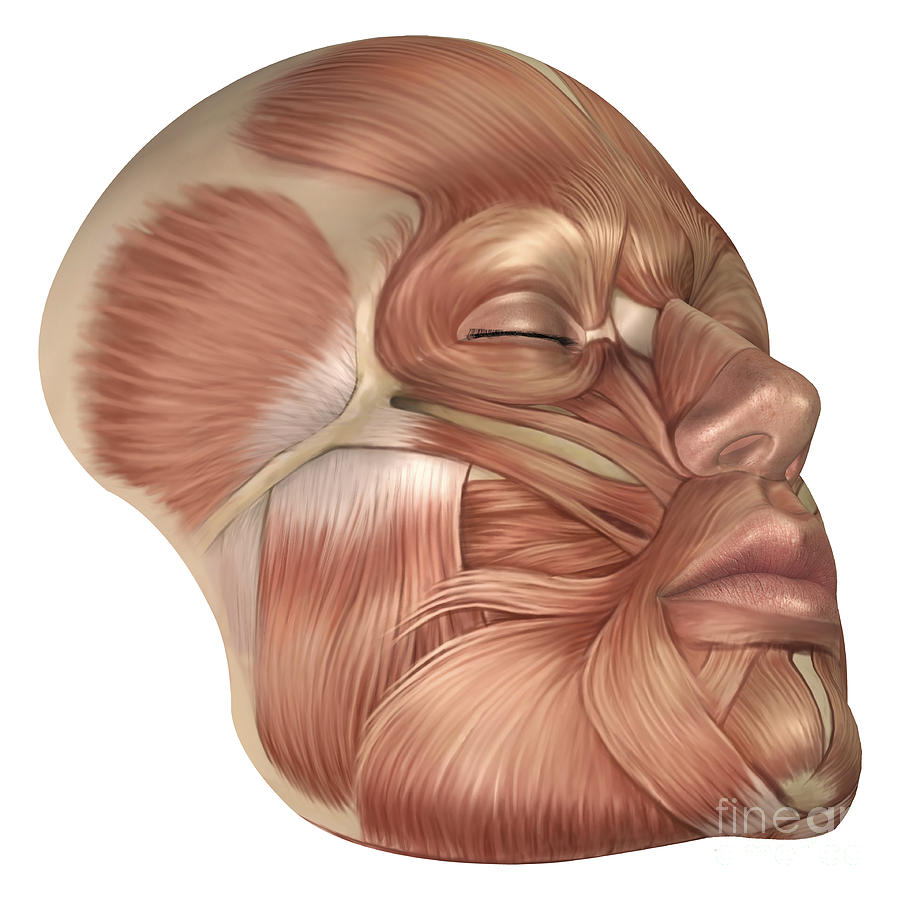
The muscles of the head and neck perform many important tasks, including movement of the head and neck, chewing and swallowing, speech, facial expressions, and movement of the eyes. These diverse tasks require both strong, forceful movements and some of the fastest, finest, and most delicate adjustments in the entire human body.
The muscles of the face are unique among groups of muscles in the body. While most muscles connect to and move only bones, facial muscles mostly connect bones to skin. These muscles, including the zygomaticus major and orbicularis oris, pull on the skin to produce a seemingly infinite number of facial expressions and to move the lips and cheeks during speech and eating.


Butterfly Anatomy 
Venation
All butterflies and moths (except Plume moths) have 2 pairs of overlapping wings, each comprised of a very thin double membrane with rigidity supplied by a network of tubular veins which radiate from the base of the wings. The pattern of veins is different for every genus of butterfly, and is one of the main criteria used by taxonomists when classifying butterflies.
Vein structure of a transparent Satyrine butterfly
Scales
The wing membranes are transparent, but are partially or fully covered in a dust-like layer of tiny coloured scales. Each scale comprises of a flat plate arising from a single cell on the wing surface.
The scales vary considerably in shape, some being rectangular, while others are shaped like tear-drops or plumes. An individual scale might typically measure about 50 microns across ( 1/20 of a millimetre ) and be 100 microns long, although many are hair-like, and are very much longer.
There can be as many as 600 individual scales per sq millimetre of wing surface, although in certain genera such as Acraea, Aporia and Parnassius the density is considerably lower, giving the wings a translucent appearance. In some tropical genera such as Ithomia, Lamproptera and Cithaerias the scales are absent from large areas of the wings, resulting in almost complete transparency.

There a 3 basic types of scale - pigmentary scales, structural scales, and androconia.
1. Pigmentary scales:
Are mostly flat. Their colour is the result of the presence of melanins, pterins and other chemical pigments, most of which are sequestered from the larval foodplants and passed to the adult butterflies. The pigments account for the basic colours found in butterfly wings - black, red and yellow. The juxtaposition of the various coloured scales, and the amount of pigment they each contain, can create the illusion of additional colours such as orange, cream and green.
In some species such as the Orange tip Anthocharis cardamines the mottled green markings on the underside are an illusion caused by having a finely balanced mixture of yellow and black scales. Subtle variations in scale pigmentation and density can create illusions such as texture or shading, which help to give the wings of some butterflies a 3-dimensional appearance.
Pigmentary scales are also known as "ground scales" as they effectively form a lower ground layer of colour and pattern on a butterfly's wings. The scales are laid out in neat rows like the tiles on a roof. Each row comprises of alternating pigmentary and structural "cover scales". The latter are larger than the pigmentary scales. They overlap them, and are semi-transparent so the colours of the pigmentary scales can be seen through them.
2. Structural scales:
The fiery hues of Lycaena Coppers, the golden-yellow of Troides Birdwings, the glittering metallic greens of Caria Metalmarks and the dazzling blues of the South American Morphobutterflies are produced by the refraction, diffraction and interference patterns of light as it strikes or passes through the semi-transparent structural scales.
In the case of diffraction light is broken up into lighter or darker bands after passing through a lattice of microscopic bubbles or slits within the scales. Refraction on the other hand is where light is broken up into its constituent rainbow colours as a result of passing through prismatic ridges on the surface of the scale. Interference patterns are the result of light passing through clear layers of varying density, and being reflected back in such a way that the colours change according to the angle of view. Examples of such iridescent colour are found in many butterflies, but are particularly striking in neotropical Doxocopa butterflies, where a band of colour can change from electric blue to vivid turquoise or dazzling silver as sunlight strikes the wings at different angles.
Another example is the Sunset moth Chrysiridia rhipheus, in which the slightest change of angle causes metallic green bands on the fore-wings to change to turquoise, while a contrasting patch on the hindwings undergoes an even more dramatic change, cycling through every colour in the rainbow as light hits it at different angles. Its extraordinary brilliance and iridescence is due to its curved ribbon-like scales, which cause light to bounce about between adjacent scales rather than be reflected straight back to the observer.
Almost all butterflies and moths have a mixture of pigmentary and structural scales. In combination these can produce any colour ranging from metallic gold to fluorescent orange, iridescent green, sapphire blue, or any other colour seen on butterfly wings. They can even display colours beyond the visible spectrum - most butterflies, in addition to the colours and patterns visible to humans and birds, also have a "hidden" ultra-violet pattern that can only be detected by other butterflies.
3. Androconia scales:
Are found mainly on male butterflies. They usually exist as slightly raised dark streaks or patches on the forewings, and often have a mealy appearance. At the base of the androconia are tiny sacs containing scent ( pheromones ). The scent is disseminated via tiny hairs or plumes on the edges of the scales, and used to entice females to copulate.
Male androconia can also take the form of tufts ( e.g. on the hindwings of Morpho and Charaxes, or can be found in androconial folds such as found on the hindwings of Papilionidae or the costal fold of Pyrginae. In the Danaini and Ithomiini they occur as "hair-pencils". These can either take the form of extrusible organs at the tip of the abdomen, or occur as long "hairs" on the hindwings. In some species e.g. Lycorea the abdominal organ is brushed against androconia on the hindwings to collect pheromones. These are later disseminated by expanding the tufts in the presence of females.
Androconia can also occur in the genital opening of female Battus, Parides, Troides, Ornithoptera and Heliconius butterflies, and in certain moth families e.g. Saturniidae, Lasiocampidae and Lymantridae.

Web references:
http://www.innerbody.com/anatomy/muscular/head-neck
http://www.learnaboutbutterflies.com/Anatomy%203.htm

Butterfly Basics

Butterflies are beautiful, flying insects with large scaly wings. Like all insects, they have six jointed legs, 3 body parts, a pair of antennae, compound eyes, and an exoskeleton. The three body parts are the head, thorax (the chest), and abdomen (the tail end). 

The butterfly's body is covered by tiny sensory hairs. The four wings and the six legs of the butterfly are attached to the thorax. The thorax contains the muscles that make the legs and wings move. 


Flying
Butterflies are very good fliers. They have two pairs of large wings covered with colorful, iridescent scales in overlapping rows. Lepidoptera (butterflies and moths) are the only insects that have scaly wings. The wings are attached to the butterfly's thorax (mid-section). Veins support the delicate wings and nourish them with blood.

Butterflies can only fly if their body temperature is above 86 degrees. Butterflies sun themselves to warm up in cool weather. As butterflies age, the color of the wings fades and the wings become ragged. The speed varies among butterfly species (the poisonous varieties are slower than non-poisonous varieties). The fastest butterflies (some skippers) can fly at about 30 mile per hour or faster. Slow flying butterflies fly about 5 mph. 

Life-cycle of a butterfly
life cycle
Butterflies and moths undergo complete metamorphosis in which they go through four different life stages.
  • Egg - A butterfly starts its life as an egg, often laid on a leaf.
  • Larva - The larva (caterpillar) hatches from an egg and eats leaves or flowers almost constantly. The caterpillar molts (loses its old skin) many times as it grows. The caterpillar will increase up to several thousand times in size before pupating.
  • Pupa - It turns into a pupa (chrysalis); this is a resting stage.
  • Adult - A beautiful, flying adult emerges. This adult will continue the cycle.

Diet
Caterpillars spend most of their time eating leaves using strong mandibles (jaws). A caterpillar's first meal, however, is its own eggshell. A few caterpillars are meat-eaters; the larva of the carnivorous Harvester butterfly eats woolly aphids. 
Butterflies and moths can only sip liquid food using a tube-like proboscis, which is a long, flexible "tongue." This proboscis uncoils to sip food, and coils up again into a spiral when not in use. Most butterflies live on nectar from flowers. Some butterflies sip the liquid from rotting fruits and a rare few prefer rotting animal flesh or animal fluids (the Harvester butterfly pierces the bodies of woolly aphids with its sharp proboscis and drinks the body fluids). 

Habitat
Butterflies are found all over the world and in all types of environments: hot and cold, dry and moist, at sea level and high in the mountains. Most butterfly species, however, are found in tropical areas, especially tropical rainforests. Many butterflies migrate in order to avoid adverse environmental conditions (like cold weather). Butterfly migration is not well understood. Most migrate relatively short distances (like the Painted Lady, the Red Admiral, and the Common Buckeye), but a few (like some Monarchs) migrate thousands of miles. 

Classification
Butterflies and moth belong to the order Lepidoptera. Lepidos is Greek for "scales" and ptera means "wing". These scaled wings are different from the wings of any other insects. Lepidoptera is a very large group; there are more types of butterflies and moths than there are of any other type of insects except beetles. It is estimated that there are about 150,000 different species of butterflies and moths (there may be many more). There are about 28,000 butterfly species worldwide, the rest are moths. 

Butterfly Fossils
Butterfly fossils are rare. The earliest butterfly fossils are from the early Cretaceous period, about 130 million years ago. Their development is closely linked to the evolution of flowering plants (angiosperms) since both adult butterflies and caterpillars feed on flowering plants, and the adults are important pollinators of many flowering plants. Flowering plants also evolved during the Cretaceous period. 

Web reference: http://www.enchantedlearning.com/subjects/butterfly/allabout/

Existing Butterfly-Human Hybrids

Upon researching for existing hybrids, I found that there was not many that had been created. A lot of them just tended to be more 'dress up', whereby the person was the body of the butterfly, and they just had wings attached. This was not necessarily helpful to me, since I could not make butterfly wings of this size and scale.

However, I did find a few similar images that looked like someone had attempted to create human-butterfly hybrids, but again, the size of the wings was just too large and the clay would've been far too heavy.  I definitely would have struggled if I were to try and make butterfly wings of this size. 

Although this is quite impressive and I like how the wings and body have been incorporated into each other, it is not what I wanted to do, because I feel that it is just too obvious, and it is almost like a fancy-dress costume. 

This is definitely more like something I had in mind, but again it is just far too big, and would not work if it was made out of clay. This looks like it has been made out of something quite light and delicate, perhaps wire and fabric, or it has even been photoshopped - clay would definitely not give this effect or texture. However, I love how the wings have been incorporated and attached into the face, and how they go right to eyes, and shapes the rest of the face. I also love the tiny antennas that have been added in-between the wings. The design of the butterfly is quite a sharp and pointy shape, which is something that I am thinking of doing, and I also love the realism and detail they have used on the wings. 

These images (especially the last one) have been of great help to me because it has given me an idea of how much it is possible to incorporate the butterfly design into the human, and the actual shape of the butterfly in the final image is something that I feel that I could work with.  For example, quite sharp lines coming up from the bridge of the nose and round the forehead for the top wings.