Saturday, 7 November 2015

Animal Hybrids

Definition of animal hybrid: the offspring of two animals or plants of different breeds, varieties, species, or genera, especially as produced through human manipulation for specific genetic characteristics.

Ligers
Ligers are the cross of a male lion and a female tiger, and they are the largest of all living cats and felines. Their massive size may be a result of imprinted genes which are not fully expressed in their parents, but are left unchecked when the two different species mate. Some female ligers can grow to 10 feet in length and weigh more than 700 pounds. Ligers are distinct from tigons, which come from a female lion and male tiger. Various other big cat hybrids have been created too, including leopons (a leopard and a lion mix), jaguleps (a jaguar and leopard mix), and even lijaguleps (a lion and jagulep mix). 

Zebroids
A zebroid is the offspring of a cross between a zebra and any other equine, usually a horse or a donkey. There are zorses, zonkeys, zonies and a host of other combinations. Zebroids are an interesting example of hybrids bred from species that have a radically different number of chromosomes. For instance, horses have 64 chromosomes and zebra have between 32 and 44 (depending on species). 

Grolar Bears
The offspring of a grizzly bear and a polar bear, a grolar bear is one beast you don't want to meet in the woods. Interestingly, unlike many hybrid animals on this list, grolar bears are known to occur naturally in the wild. Some experts predict that polar bears may be driven to breed with grizzly bears at an increased frequency due to global warming, and the fact that polar bears are being forced from their natural habitats on the polar ice.

Wholpins
A cross between a false killer whale and an Atlantic bottlenose dolphin, wholphins are hybrids that have been reported to exist in the wild. There are currently two in captivity, both at Sea Life Park in Hawaii. The wholphin's size, color and shape are intermediate between the parent species. Even their number of teeth is mixed; a bottlenose has 88 teeth, a false killer whale has 44 teeth, and a wholphin has 66.

Savannah Cat
Savannah cats are the name given to the offspring of a domestic cat and a serval — a medium-sized, large-eared wild African cat. The unusual cross became popular among breeders at the end of the 20th century, and in 2001 the International Cat Association accepted it as a new registered breed. Interestingly, savannahs are much more social than typical domestic cats, and they are often compared to dogs in their loyalty. They can be trained to walk on a leash and even taught to play fetch.

I actually found it quite interesting when looking into these hybrids, because a lot of them I did not know existed. I love looking at the final product of the 2 different animals combined together, and how you can pick out which features come from which specific animal. I think it's really fascinating that you can just combine 2 things together and make something totally new, this leads to endless possibilities of animal breeds!

Web references: 
dictionary.reference.com/browse/hybrid
http://www.mnn.com/earth-matters/animals/photos/11-amazing-hybrid-animals/

Friday, 30 October 2015

My Halloween Make-up


I created the wounds by applying Cinewax to the skin and blending the edges, I then used a sharp edge to create a cut/gash in the centre. I coloured the cinewax with foundation (that matched my face) and supracolor to add slight bruising/redness. Finally, I applied wound filler into the cut, and dripped blood over it, and on other parts of the face/body. 

I accompanied these wounds with a very dark black and red smokey eye and ombre lip. To finish off the look I added white contact lenses, and also had to put them in for someone else! Although this did take a while, me and my model kept communicating, and eventually we managed to get them in! They definitely complete the look. 

I thought that this was relevant to post on my blog because it shows a different way in which you can create wounds without creating a mould and casting. Although it is easier and quicker to do, I would say that the results are not as authentic and obviously you can not recreate or reuse the Cinewax wounds. 


Wednesday, 28 October 2015

Technical Folder - How To Apply A Bald Cap

Helpful Tips:

  • Do not apply moisturiser prior to bald cap application
  • Do not use any pins/grips in the hair
  • You are aiming to create the smoothest/roundest possible
  • Some bald caps will be specifically made to fit a model's head
  • Any straight edges can be seen on camera much easier than curved/wobbly ones
  • They cannot go on anyone that has a weave
The Application:
  1. Remove any make-up from the model, ensuring the edges of the head are clean
  2. Spray the hair with water and brush through
  3. Put a strong hair gel through all of the hair
  4. Keep brushing to ensure that it is as smooth as possible
  5. (If short-ish hair) wrap all of the hair to one side and scrape as flat to the skull as possible
  6. (If longer hair) split the hair into 2 and wrap the hair round the opposite sides of the head, keeping it as flat to the skull as possible
  7.  Get the model to hold the front of the cap, whilst you carefully pull it over the rest of the head
  8. Check that all the hair is pushed back (using a pintail comb), and use soap to get rid of any baby hairs on the face
  9. Cut the bald cap very carefully to fit the model, starting at the ears
  10. Get the model to stretch forward when cutting around the back of the neck
  11. Peel back the front of the cap and apply spirit gum to both the cap, and the model's forehead 
  12. Wait for it to go tacky before sticking it back down
  13. Use a damp puff/towel, press the cap down onto the model's skin
  14. Use acetone to help melt the edges away

  15. You can now begin to colour. Using the supra colours, mix white and red to create a baby pink. Using a sponge, dab this across the whole head. This will cancel out the hair colour underneath the cap.
  16. Using the ultra foundation palette, use a sponge once again and dab all over the head.
  17. Apply translucent powder to the head
  18. Add any additional touches, such as flicking the alcohol palette colours onto the head to create freckles, or making veins using the supracolor palette

Saturday, 24 October 2015

Human Hybrid Initial Research

Hybrid: the offspring of two animals or plants of different breeds, varieties,species, or genera, especially as produced through humanmanipulation for specific genetic characteristics.

Human-Nature hybrids

Human-Animal hybrids

I felt that the best way to gain initial knowledge and ideas/inspiration is to look at visuals, as to me, this sums up hybrids better than words can. Initially, I am more drawn to the idea of the human-nature hybrid because I feel that the outcome can be slightly more experimental and less 'obvious', but I will continue researching. 

At this present moment, I feel slightly overwhelmed by this project and the brief because it seems like it will require a lot of preparation, and extremely good technical skills... I hope that we are taught the required skills to be able to create an outcome that is of a high standard, because I think it could be a lot of fun and allow me to be very creative and innovative. 


SFX Make-up In TV/Film & Its History


HISTORY
  • The first archaeological evidence of cosmetic usage is found in Ancient Egypt around 4000 BC
  • The Ancient Greeks and Roman also used cosmetic containing mercury and often lead.
  • In the western world, cosmetics were used throughout the medieval period, although their use was typically restricted to the upper classes.

  • The using of special effect was in 1895 in the film "Demolotion d'un Mur" in Paris and this is actually the first experiment on trick photography.
  • In 1902, "A Trip to the Moon" and "Adventurous Automobile Trip" also using special effect makeup.
  • In 50's, Sci-fi and Horror genre became famous and in 90's CGI began to used in film such as Terminator, and Jurassic Park sequel.

  • The early black and white movies didn't show colors and by that special effects makeup had limitations.
  • Actors had to find their ways to help makeup bring their character alive, so that the acting is believable
  • With time and new technology, makeup effects see no more boundaries.
  • As an example:

SELF SERVICE
  • Actors, in the days before the "Talkies", often put on their makeup on.
  • Because of they short main power, actors tend to put their makeup by themselves.
  • Its easier and they don't spent much time by waiting and just to be on the character.

LON CHANEY SR.
  • He was a trailblazer in using simple yet innovative ideas such as wigs and fish skins to change his looks.
  • He also Named "The Man of a Thousand Faces" and we can see he features in silent movies.
  • His specialty in makeup is "Extraordinary Characterization".
"i wanted to remind people that lowest types of humanity may have within them the capacity for supreme self-sacrifice," Chaney wrote in Moviemagazine.
  • This mean that he teach us to use any usable material in making the pieces. As an example, news paper, we can reuse it to make a new character.
 
* Lon Chaney Sr. in Phantom of the Opera and Himself


MAX FACTOR
  • This product create makeup specifically designed for films.
  • This giant step allowed for further development in special effects.
  • From the basic step, this product change and evolve the using of makeup to another stage by developing the using of makeup.

FRANKENSTEIN
  • The fictional Frankenstein monster's body was create piece by piece in a laboratory.
  • His head was fashioned of Collodion-Soaked Cheese Cloths and Grease Paint.
  • This is one of the well known movie all time by creating a monster using special effect makeup.
  • The making took many hour just to create one piece of the body such as couple of ears, nose, mouth etc.

*Boris Karloff as The Frankenstein Monster


PROSTHETIC
  • "The Wizard of Oz" was the big movie to use prosthetic.
  • Actors had a part glued on to them in the morning before the camera roll.
  • Its shows that many time needed for them to prepare for the scene.
  • The basic process is prosthetic sculpting, molding to create advance cosmetic effects.


LEADER:
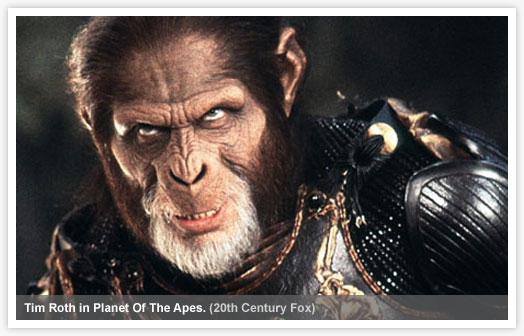
  • Rick Baker : An American Werewolf in London, The Nutty Professor, Planet of the Apes, How the Ginch Stole Christmas.
 
  • Tom Savini : Friday The 13th, Dawn of the Dead, Creepshow.
  • Rob Bottin : The Howling, The Thing, Robocop, Total Recall.
  • Ben Nye : The Fly
  • William J.Tuttle : 7 Faces of Dr.Lao

Book Reference:
Special Effects Make-up By Janus Vinther, Psychology Press, 2003

Web Reference:
http://jaimieslookbook.blogspot.co.uk/2011/01/chapter-1-history-of-special-effect_15.html

The Aftermath

The club owners immediately rang an ambulance...
In the mean time, they were told:

  • Don't try to remove the object. Doing so could cause further harm.
  • If needed, control bleeding by pressing firmly around the object to bring the edges of the wound together and by raising the injury higher than the heart.
  • Bandage the wound. First put a piece of gauze over the object. Then, if it helps, put clean padding around the object before binding the wound securely with a bandage or a piece of clean cloth. Take care not to press too hard on the object.

She then went to hospital where the damage would be assessed by one of these methods...

Epidemiology

The prevalence of glass foreign bodies in wounds from injury has been recorded in 1.5% in superficial (subcutaneous) wounds and 7.5% of deeper wounds  

Radiographic appearance

Plain film
Only ~10% of x-rays ordered for investigation of retained foreign bodies are positive (reflecting the low incidence post injury) but x-rays are excellent at detecting radiopaque foreign bodies with ~85% being detected
  • glass is always radiopaque, independent of lead content or other additives
  • should be visible on plain films if larger than 2mm 2, 5
Ultrasound
  • can be used to further localise foreign bodies and define relationship with soft tissue structures and assess for further injuries
  • appears hyperechoic with posterior shadowing and often demonstrates reverberation artifact
  • if present for >24 hours may demonstrated a hypoechoic ring 3-4
They were able to remove the glass, and no serious damage was caused, but she will be left with a small scar that may eventually fade...

Web reference:
http://www.mayoclinic.org/first-aid/first-aid/basics/art-20056604
http://radiopaedia.org/articles/glass-foreign-bodies
http://www.london24.com/polopoly_fs/1.3203045!/image/2392105568.jpg_gen/derivatives/landscape_490/2392105568.jpg

Medical Records


RCP Approved ‘Generic Medical Record Keeping
Standards’
Prepared by the Health Informatics Unit of the Royal College of Physicians
Generic medical record keeping standards define good practice for medical records and address the broad requirements that apply to all clinical note keeping. These standards were developed by the Health Informatics Unit of the Royal College of Physicians following review of published standards and wide consultation. They were first published in 2007 in Clinical Medicine.

Standard Description
  1. The patient’s complete medical record should be available at all times during their stay in hospital
  2. Every page in the medical record should include the patient’s name, identification number (NHS number)1 and location in the hospital
  3. The contents of the medical record should have a standardised structure and layout 
  4. Documentation within the medical record should reflect the continuum of patient care and should be viewable in chronological order
  5. Data recorded or communicated on admission, handover and discharge should be recorded using a standardised proforma2
  6. Every entry in the medical record should be dated, timed (24 hour clock), legible and signed by the person making the entry. The name and designation of the person making the entry should be legibly printed against their signature. Deletions and alterations should be countersigned, dated and timed
  7. Entries to the medical record should be made as soon as possible after the event to be documented (e.g. change in clinical state, ward round, investigation) and before the relevant staff member goes off duty. If there is a delay, the time of the event and the delay should be recorded
  8. Every entry in medical record should identify the most senior healthcare professional present (who is responsible for decision making) at the time the entry is made
  9. On each occasion the consultant responsible for the patient’s care changes, the name of the new responsible consultant and the date and time of the agreed transfer of care, should be recorded
  10. An entry should be made in the medical record whenever a patient is seen by a doctor. When there is no entry in the hospital record for more than four (4) days for acute medical care or seven (7) days for long-stay continuing care, the next entry should explain why3
  11. The discharge record/discharge summary should be commenced at the time a patient is admitted to hospital
  12. Advanced Decisions to Refuse Treatment, Consent, Cardio-Pulmonary Resuscitation decisions must be clearly recorded in the medical record. In circumstances where the patient is not the decision maker, that person should be identified e.g. Lasting Power of Attorney

Web reference: 
https://www.rcplondon.ac.uk/sites/default/files/generic-medical-record-keeping-standards-2009.pdf
http://helpers.shl.lon.ac.uk/examples/lshtm.gif